What were the first materials used to make clocks?
Summary
- 1. History of watchmaking
- 2. Types of clocks
- 3. Functioning and mechanism
- 4. Materials used in manufacturing
- 5. Maintenance and repair
1. History of Watchmaking
The history of watchmaking is fascinating and reveals the evolution of civilization through time. From the first clocks created by humankind to contemporary advancements, each period has brought its share of innovations. Understanding how these objects were constructed allows us to appreciate the finesse and complexity of modern watchmaking .
- Rudimentary beginnings: The first clocks were often made with local natural materials such as wood and stone.
- Techniques and advances: As technology evolved, the use of metals such as brass and iron improved accuracy.
- Historical significance: Clocks played a crucial role in the development of science and navigation.
In summary, this section helps you better understand the evolution of clockmaking and make the best decisions regarding the purchase of your wall clock.
1.1 How has watchmaking evolved?
The history of clocks begins several centuries ago and testifies to human ingenuity. This subsection traces some key stages in this evolution.
- 1: The first water clocks, called clepsydras, were used in ancient Egypt.
- 2: With the rise of mechanical horology in the Middle Ages, clocks became objects of art and precision.
- 3: The invention of the anchor escapement and the mainspring in the 18th century revolutionized the measurement of time.
This subsection highlights the essential elements for understanding the evolution of watchmaking techniques.
1.2 From materials to innovative techniques
Throughout history, the materials used in clocks have changed and improved to offer greater accuracy and durability.
- 1: Initially, wood and stone were the main materials used.
- 2: The introduction of metals such as bronze and steel in the Middle Ages enabled the manufacture of more precise gears.
- 3: Today, materials such as ceramics and glass are being added for modern and aesthetic designs.
Innovations in materials have made it possible to create clocks that are increasingly precise and aesthetically pleasing.
2. Types of Clocks
Clocks come in many types, from classic mechanical models to modern digital formats. Each type of clock offers its own style and distinct advantages. Understanding these differences can help you choose the clock that best suits your needs and style.
- Oscillation between tradition and modernity: Mechanical clocks offer a classic charm while digital ones bring a touch of modernity.
- Various applications: From wall clocks to pocket watches, each type has a distinct function.
- Practical aspects: Choosing the right type for the room in your house can enhance the interior decoration.
In summary, understanding the differences between each type of clock will allow you to make an informed choice to enhance your space.
2.1 What are the differences between mechanical and digital clocks?
The distinction between mechanical and digital clocks lies primarily in their method of measuring time and their appearance. Choosing between these two types depends on your personal preferences in terms of style and functionality.
- 1: Mechanical clocks use gears and springs; they require manual winding.
- 2: Digital clocks operate using electronic circuits, offering increased accuracy.
- 3: While mechanical watches have a traditional design, digital watches offer modern features such as LED displays.
Knowing these differences will help you choose the clock model that best fits your interior.
2.2 A diversity of watches: wall watches, pocket watches, monumental watches
Clocks are available in a wide variety of shapes and sizes, each with its own function and aesthetic appeal. Depending on your space and needs, you can choose the model that best suits you.
- 1: Wall clocks are perfect for decoration and visible throughout the room.
- 2: Pocket watches, true collector's items, are highly prized by vintage enthusiasts.
- 3: Monumental clocks, often located in public places, illustrate the art of clockmaking on a large scale.
By exploring these various styles, you can add a unique touch to your interior.
3. Functioning and Mechanism
The mechanism of clocks is an art in itself. Every movement, cog, and gear works in perfect harmony to measure time with precision. Understanding the inner workings of clocks can help you better appreciate why they are masterpieces of engineering.
- Cogs and gears: The internal parts of clocks perform synchronized movements to ensure accuracy.
- Various mechanisms: Clocks can be quartz, pendulum or electronic.
- Precision element: Each mechanism has its role to guarantee the synchronization and accuracy of the timekeeping.
Understanding how clocks work allows you to better choose the ideal model for your home.
3.1 What are the mechanisms and movements of a clock?
The internal workings and movements of a clock play a crucial role in how it keeps time. Understanding these mechanisms will better prepare you to choose and maintain your clock.
- 1: Mechanical movements use springs to power the clock.
- 2: Quartz movements are more modern and work with quartz crystals to offer greater precision.
- 3: The pendulum is a key component in antique clocks, stabilizing the movement.
This in-depth knowledge will help you to better analyze the mechanisms of watchmaking .
3.2 Compare the mechanisms to make a better choice
Choosing a clock involves understanding different types of mechanisms. Each mechanism has its own advantages and disadvantages, which influence its accuracy and maintenance.
- 1: Quartz clocks offer high accuracy with minimal maintenance.
- 2: Mechanical clocks require regular maintenance but are prized for their craftsmanship.
- 3: Automatic clocks, often found in wristwatches, combine elements of both systems.
With this information, you will be able to make an informed choice for a clock that suits your lifestyle.
4. Materials Used in Manufacturing
The choice of materials used to make clocks plays a key role in their appearance, durability, and accuracy. Over the centuries, different materials have been used, each offering its own unique advantages and characteristics. Discover the materials that have shaped the evolution of clocks.
- From ancient to modern: The first clocks used natural materials for their mechanisms.
- Technology and innovation: Industrial advances have introduced new, more robust materials.
- Personalization and design: Modern materials allow for a wide range of styles and designs.
Learn more about materials to choose a clock that fits perfectly with your decor.
4.1 What materials were used for the first clocks?
The first clocks were made with simple and accessible materials, but as techniques evolved, craftsmen began to adopt more sophisticated materials.
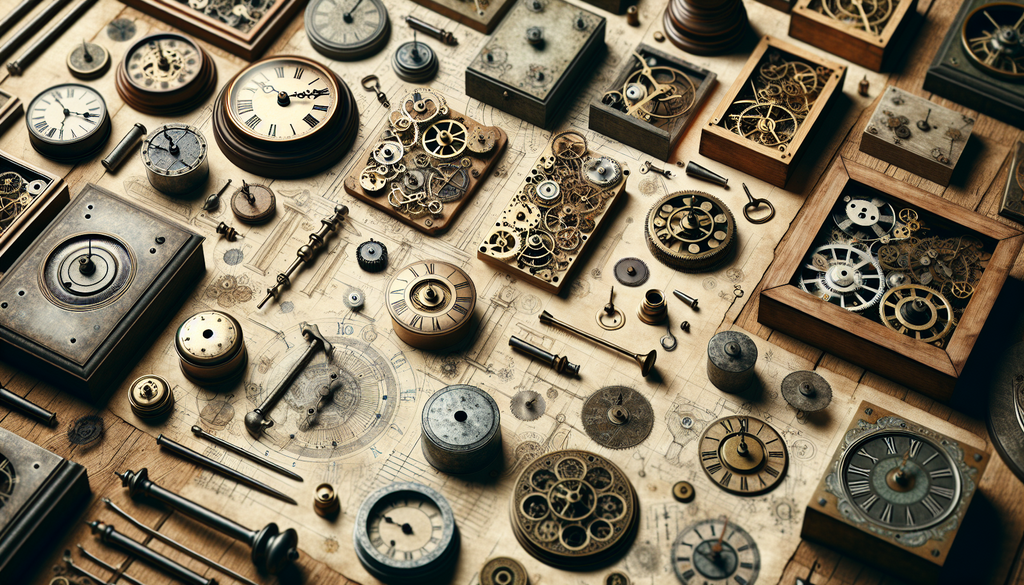
- 1: Wood was often used for the structures and gears of early mechanical clocks.
- 2: The parts could also be made of stone, especially for large monumental clocks.
- 3: During the Renaissance era, bronze and iron began to be used to improve durability and precision.
Understanding the materials used in early clocks will allow you to appreciate the craftsmanship and ingenuity of these ancient objects.
4.2 Recent innovations in clockmaking
The materials used in the manufacture of wall clocks continue to evolve with the advancement of technologies, allowing for new and innovative designs and functionalities.
- 1: Composite materials and plastics make it possible to produce lightweight and durable clocks.
- 2: Glass and ceramics are increasingly used to offer modern and sleek designs.
- 3: 3D printing and new engraving techniques allow for endless customizations.
Recent innovations are paving the way for clocks that combine tradition and modernity to beautify our interiors.
5. Maintenance and Repair
Owning a wall clock is one thing, but knowing how to care for it is just as essential. Regular maintenance and proper repairs will extend the life of your clock while preserving its accuracy and aesthetic appeal. Discover the best practices for taking care of your clock.
- Regular maintenance: Proper maintenance ensures optimal performance.
- Problem identification: Knowing how to detect early signs of wear or malfunction.
- Repair solutions: Techniques for fixing common problems yourself or determining when to call in an expert.
Proper care and repair of your clock will allow you to enjoy its design and utility for many years.
5.1 How to effectively maintain a clock?
Regular maintenance of a clock is crucial to ensure its longevity and functionality. Simple maintenance can make all the difference in your clock's accuracy.
- 1: Regularly clean the outside of the clock with a soft cloth to prevent dust.
- 2: For mechanical clocks, make sure they are wound regularly.
- 3: Check the batteries in digital or quartz clocks and replace them to avoid interruptions.
These simple practices will help you keep your clock in perfect working order.
5.2 Solutions to common clock problems
Clocks can encounter various problems over time, but most of them have simple solutions that do not necessarily require the help of a professional.
- 1: A clock that runs fast or slow may require precise adjustment of its mechanism.
- 2: Strange noises may indicate misalignment or a need for lubrication of the gears.
- 3: If the clock stops completely, check the power supply or springs for signs of damage.
These solutions will help you diagnose and resolve many common problems, ensuring your clock functions properly.
Frequently Asked Questions
To help you get the most out of our wall clocks , we have compiled a list of frequently asked questions and their answers.
- Where can I buy clocks made with historical materials? Visit our shop on Temps des Horloges to discover a wide range of wall clocks inspired by historical materials.
- How to choose between a mechanical and a digital clock? Choose according to your preferences for traditional or modern style, and consider the type of maintenance you are willing to perform.
- What materials are the most durable for a wall clock? Brass and stainless steel are known for their durability, while glass and ceramic add a sophisticated touch.
Additional information
Early clocks were crafted from natural materials like wood and stone, giving them a rustic and unique charm. Over the centuries, these materials have evolved to include metal and glass, each bringing its own distinctive characteristics and styles to clockmaking. Understanding the materials used in clockmaking not only allows you to appreciate the craftsmanship but also helps you choose the right clock for your home. For a better understanding of contemporary wall clocks, this guide , "How to Synchronize Multiple Wall Clocks in a Room," might be helpful.
Maintenance checklist
- 1: Identify the material of your wall clock before cleaning to choose the most suitable method.
- 2: Gently remove the dust with a soft, dry cloth to avoid scratching glass or metal surfaces.
- 3: For wooden clocks, occasionally apply a special wax to protect them from moisture and cracks.
- 4: Avoid using harsh chemicals that could damage the material of your wall clock .
- 5: Regularly check the batteries and internal mechanism to ensure the clock is working properly.
Pro tip
To extend the life of your wall clock , place a small packet of silica gel inside or behind the clock. This helps absorb excess moisture and protects the components from rust and corrosion.
For those who are curious or passionate, we recommend this additional article.
Conclusion
In this article, we have traveled through time to discover the ancestral materials that gave life to the first clocks , silent witnesses to the technological and aesthetic evolution of past centuries.
From stone to brass, these materials tell a fascinating story and invite us to revisit our contemporary choices with an enlightened perspective.
🕰️ Ready to reinvent your interior with a unique wall clock? Dive into our collections and explore the many facets of this timeless art!
Additional resources
-
Posted in
best-sellers