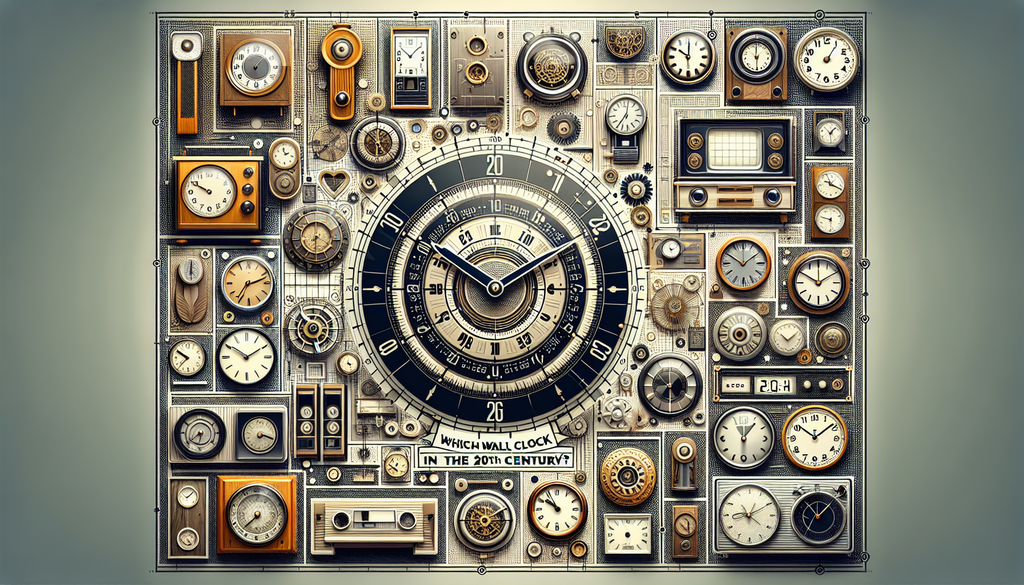
Which wall clocks became iconic in the 20th century?
Summary
- 1. Introduction to the wall clock
- 2. Types of wall clocks
- 3. Iconic 20th Century Wall Clocks
- 4. How to choose a wall clock
- 5. Care and maintenance
1. Introduction to the wall clock
Wall clocks are not just timekeeping instruments, but also key elements in interior design . The 20th century saw the emergence of iconic models that have left their mark on design history. This article explores which wall clock models have become legendary and why they are essential to modern living.
- Historical significance: Wall clocks have accompanied the evolution of modern homes, becoming a symbol of style and punctuality.
- The decorative aspect: They add a touch of elegance and personality to any room.
- A major stylistic impact: Each period has brought innovations in materials and design.
In summary, this section immerses you in the history and importance of wall clocks in contemporary decoration.
1.1 What is the history of wall clocks?
The history of wall clocks is closely linked to the technological and artistic evolution of societies. They have always been much more than a simple tool for measuring time.
- Ancient origins: Dating back several centuries, the first wall clocks appeared in monasteries.
- Technical evolution: The 20th century introduced more sophisticated and precise mechanisms.
- Mix of materials: From wood to metal, each material brought a different dimension to the design of the clocks.
This subsection highlights the essential elements for understanding the evolution of wall clocks .
1.2 Why are wall clocks important in decoration?
In interior design , wall clocks are much more than just a functional accessory. They often define the style and atmosphere of a room.
- Central decorative elements: They can become the focal point of any decoration.
- Versatility of styles: Available in various designs, they adapt to all types of decor, from classic to modern.
- Customization: They allow the inhabitants to express their personality through unique aesthetic choices.
This subsection explains why wall clocks are essential in the art of interior design .
2. Types of wall clocks
In the world of wall clocks , there is an incredible variety of types to suit diverse tastes and needs. This choice is further enhanced by modern technologies and a range of materials.
- A wide range of choices: Clocks vary between analog and digital models.
- Influence of materials: Each material provides a different appearance and durability.
- Practicality and interface design: User-focused designs combining aesthetics and functionality.
In summary, this section helps you better understand the different types of wall clocks and how they can fit into your life.
2.1 Analog vs. Digital Clocks
The debate between analog and digital wall clocks continues to divide design enthusiasts. Each offers distinct advantages.
- Traditional charm of analog watches: They are often preferred for their classic and timeless aesthetic.
- Accuracy of numerical devices: Often chosen for their readability and advanced features.
- Combination of the two: Some innovative models incorporate both technologies for a hybrid look.
This subsection highlights the key differences between analog and digital wall clocks .
2.2 Materials used for wall clocks
The choice of materials for wall clocks impacts not only their appearance but also their durability and maintenance.
- Use of wood: Brings a warm and organic touch to any space.
- The elegance of metal: Offers a modern and robust industrial style.
- Use of plastic: Often used for modern and playful designs, as well as for their lightness.
This subsection informs you about popular materials for wall clocks and their influence on design.
3. Iconic 20th Century Wall Clocks
The 20th century was a period of rapid evolution in wall clock design and technology. Discover the models that have left an indelible mark on the world of design.
- Famous creations: Some clocks have become iconic thanks to their unique and timeless design.
- Influential figures: Designers who shaped the landscape of wall clocks .
- Key years and designs: The periods that saw the emergence of revolutionary concepts.
This section guides you towards the wall clock designs that marked the 20th century.
3.1 What are some famous models from the 20th century?
Some wall clock designs have become iconic thanks to their avant-garde design and their ability to capture the essence of their era.
- ATO clock by Georges Favre-Jacot: Revolutionizing the concept of the electric clock.
- George Nelson's Ball Clock: A striking example of American modernism with its radiating points.
- Sunburst clock: Synonymous with 1960s design, it denotes bold creativity.
This subsection highlights wall clocks that have stood the test of time thanks to their bold design and innovation.
3.2 Iconic Designers and Influencers
20th-century wall clocks owe a great deal to visionary designers who transformed the ordinary into masterpieces.
- George Nelson: Known for his iconic modernist designs.
- Max Bill: Influencer of the Bauhaus style in wall clocks.
- Le Corbusier: Who introduced elements of brutalist design into his watchmaking creations.
This subsection highlights the illustrious creators who influenced the world of wall clocks during the 20th century.
3.3 Pivotal Years and Revolutionary Designs
Certain moments in the 20th century were particularly conducive to innovation in wall clock design . These pivotal years generated revolutionary pieces that continue to inspire today.
- 1920s: The Art Deco era, influencing finishes and motifs.
- 1950s-1960s: Rise of modernism with extensive experimentation with forms and colours.
- 1970s: Return to craftsmanship and authenticity in clock design.
This subsection explores the periods that transformed the design of wall clocks .
4. How to choose a wall clock
Choosing the perfect wall clock can successfully complement your interior décor while also fulfilling a functional need. Here's how to make your selection.
- Key criteria: Aspects to consider when choosing the best clock for you.
- Harmonizing styles: Integrating a clock into a variety of decors.
- Practical considerations: Tips to better adapt your choice according to space and use.
This section guides you through the process of selecting the perfect wall clock for your space.
4.1 What are the selection criteria?
To choose a wall clock that suits your space, it is important to consider several key factors that will ensure a wise purchase.
- Style and aesthetics: Choose a clock that matches your current decor.
- Size and proportion: Make sure it fits well in the available space on your wall.
- Features: Look beyond simply displaying the time, towards features such as alarm or temperature.
These selection criteria will help you make an informed choice for your next wall clock .
4.2 Harmonize with different decorating styles
Incorporating a wall clock into your space requires ensuring that it harmonizes with the rest of your furniture and interior style.
- Classic style: Opt for materials like wood to create a warm atmosphere.
- Modern style: Look for minimalist designs with clean lines.
- Industrial style: Bold metals and numbers complete this look.
This subsection offers advice on how to harmonize your wall clock with different interior design styles.
5. Care and maintenance
Keeping your wall clock in perfect condition ensures not only its proper functioning but also its longevity. Discover how to take good care of your clocks.
- Care instructions: Practical tips to prolong the life of your clock.
- Problem solving: How to handle common problems that may arise.
- Regular maintenance program: Establish a preventive maintenance routine.
In summary, this section helps you keep your wall clock in excellent condition with care and maintenance tips.
5.1 Tips for extending the life of your clock
To ensure a long and efficient life for your wall clock , a few simple but effective maintenance steps can make all the difference.
- Cleaning: Clean regularly with a soft cloth to prevent dust and debris.
- Battery check: Change the batteries regularly to prevent leaks.
- Avoid humid places: Install your clock in a place protected from moisture to prevent corrosion.
These tips will ensure that your wall clock remains in perfect working order and aesthetically pleasing.
5.2 Solving common problems
Wall clocks can sometimes experience problems that require special attention. Here's how to identify and resolve some of the most common issues.
- Clock not setting the correct time: Check and adjust the gears and check the batteries.
- Excessive noise: Ensure that all moving parts are properly in place and lubricated if necessary.
- Aesthetic problems: For wear or discoloration, consider refreshing with suitable products.
This subsection guides you in the quick and effective resolution of common problems related to wall clocks .
FAQ
Do you still have questions? Discover here some answers to frequently asked questions about wall clocks .
- 👍 Where can I buy iconic 20th-century wall clocks? Explore our exclusive collection at Temps des Horloges to discover models inspired by iconic 20th-century designs.
- 🔧 How do you know if a clock needs maintenance? Pay attention to unusual noises and regularly check the condition of the surface and the batteries.
- 🎨 What's the best way to match a clock with my interior? Opt for styles and materials that complement your furniture and the colors of your room.
For more advice and inspiration, feel free to visit our online store , Temps des Horloges .
Additional information
Throughout the 20th century , certain wall clocks became iconic, marking not only time but also design history. If you're interested in maintaining these exquisite pieces, you might want to know how to detect common malfunctions in a digital wall clock. This could prove very useful.
Maintenance checklist
- 1: Regularly dust your wall clock with an anti-static cloth.
- 2: Use a mild cleaning product suitable for the material, whether it is wood, metal or plastic.
- 3: Check the clock mechanisms every six months to ensure optimal operation.
- 4: Replace the batteries as soon as you notice a slowdown in the movement of the hands.
- 5: Avoid direct exposure to sunlight to prevent discoloration of the material.
Pro tip
To prolong the life of your wall clock , apply a thin coat of linseed oil to the wooden parts once a year. This moisturizes the wood and prevents cracking.
Useful external resource
For those who are curious or passionate, we recommend this additional article.
Conclusion
From a simple utility to a key element of interior design, the evolution of the wall clock during the 20th century has made it an iconic piece.
Whether you are passionate about period designs or simply looking for an eye-catching piece, the history of wall clocks offers a wealth of inspiration.
🕰️ Ready to rediscover the story of your new acquisition? Dive into our selections and deepen your knowledge with our resources.