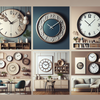
Wall clock vs. wall pendulum clock: what are the differences?
Summary
- 1. Definitions and differences
- 2. History and evolution
- 3. Design and styles
- 4. Uses and functionalities
- 5. Advantages and disadvantages
- 6. Buyer's Guide
1. Definitions and differences
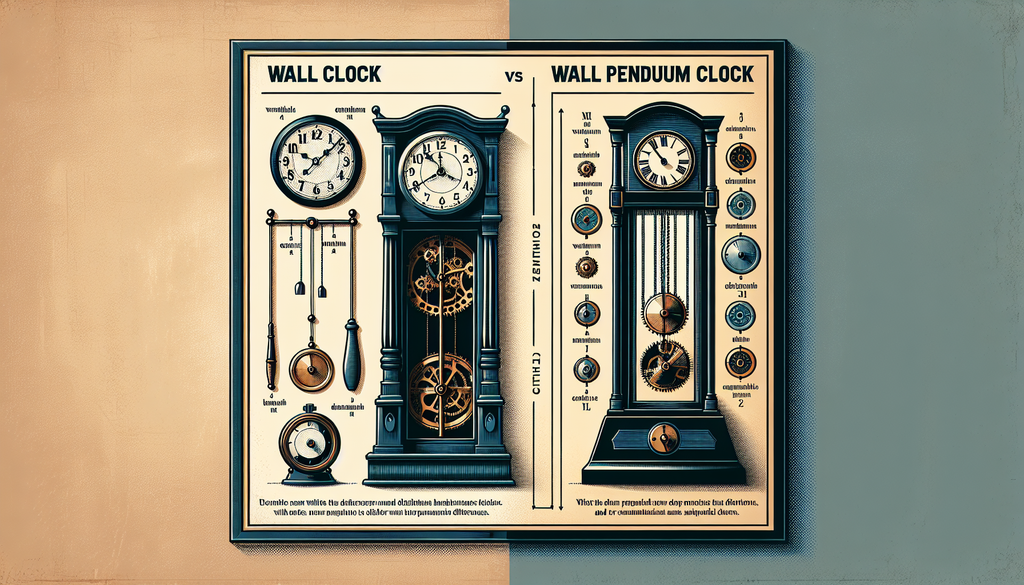
In this article, we'll explore the difference between two often confused objects: the wall clock and the wall pendulum clock. These two timekeeping instruments are distinguished not only by their name, but also by their history, design, and distinct functions. Understanding these differences can help you choose the one best suited to your specific needs.
- Clear definition: Distinction between clocks and pendulums based on their mechanism and operation.
- Historical context: Chronology of their respective development, giving an overview of their evolution.
- Practical comparison: How these differences influence daily use and aesthetics.
In summary, this section helps you better understand the subtleties between these two types of devices, allowing you to make informed decisions when purchasing or decorating your interior.
1.1 What is a wall clock?
The subsection on wall clocks highlights what they are, how they generally work, and their role in our modern interiors. It clarifies their importance not only as timekeeping instruments but also as decorative elements.
- Simple mechanism: Wall clocks are usually battery-powered, using a quartz movement to tell the time.
- Growing popularity: According to some studies, wall clocks account for 65% of clock sales thanks to their ease of use and accessibility.
- Variety of designs: Available in many styles and materials, they easily adapt to any interior.
This subsection highlights the essential elements for understanding what a wall clock is, its main functions and its general appeal on the market.
1.2 What is a wall clock?
Let's explore the definition and specifics of a wall clock. This type of timepiece, which dates back several centuries, is distinguished by unique characteristics that make it a special decorative and functional choice.
- Sophisticated mechanism: Originally, wall clocks operated using a pendulum, requiring regular winding.
- Heritage and tradition: Generally considered as works of art, they add a touch of tradition to any space.
- Exclusive: Due to their complex mechanism, they are often more expensive and perceived as more prestigious than wall clocks.
This subsection offers you a detailed overview of what distinguishes wall clocks from other timekeeping devices, highlighting their technical and aesthetic specificities.
1.3 Comparison of features
Let's compare the main features of wall clocks and wall pendulum clocks. Although both devices measure time, they do so in different ways, thus offering varying advantages depending on the application.
- Note: Wall clocks are often more accurate thanks to their modern quartz movement, while pendulum clocks can lose a few minutes without regular adjustment.
- Maintenance: Wall clocks require little maintenance, unlike pendulum clocks which require periodic adjustments and winding.
- Aesthetic impact: Pendulum clocks offer a more traditional and artistic visual appeal, while wall clocks integrate more easily into modern decors.
In summary, understanding the distinct features of each type of clock can guide your choices based on your needs for accuracy, maintenance, and interior aesthetics.
2. History and evolution
The evolution of clocks and wall clocks has shaped our perception of time. By exploring their history, you will discover the technical innovations that transformed these utilitarian objects into centerpieces of interior design, enriching our understanding of their role in the home.
- Historical origins: Clocks have a more recent origin compared to pendulum clocks, which date back to the medieval period.
- Technological innovations: The introduction of quartz in the 1970s revolutionized the accuracy of wall clocks.
- Aesthetic transformation: The designs have evolved to reflect the artistic trends of each era, from baroque to contemporary.
This section opens the doors to the fascinating historical journey of clocks and pendulums, capturing the technical and artistic evolution through the ages.
2.1 History of wall clocks and pendulum clocks
Let's delve deeper into the history of these timekeeping instruments, which not only served to indicate the time, but also to reflect the social status and technological advancement of each era.
- A pioneering invention: The first clocks date back to the 13th century, marking the beginning of mechanized time measurement.
- Renaissance Clocks: The Renaissance saw the rise of wall clocks, which became symbols of sophistication and influence.
- Continuous evolution: Each century has brought progress, from Galileo's pendulums to modern quartz, changing efficiency and precision.
This subsection highlights the extraordinary history of clocks and pendulums, illustrating their fundamental role in capturing time.
2.2 How have they evolved?
The evolution of clock and wall clock designs reflects a constant adaptation to changing consumer aesthetic tastes, while incorporating technical advances.
- Stylistic adaptation: The designs have followed global artistic movements, moving from Gothic to modern minimalist.
- Materials innovation: Traditional materials like wood and metal have been joined by plastic and glass for contemporary designs.
- Increased functionality: The development of features such as digital displays and alarm integrations has expanded their usefulness.
In conclusion, this section traces the remarkable evolution of clocks and pendulums, showing how they have managed to remain relevant and fashionable over time.
3. Design and styles
Wall clocks and pendulums aren't just for telling time. They also play a crucial role in our home décor. In this section, we'll examine some popular styles, offering insights into design options to enhance your living space.
- Variety of trends: Wall clock and pendulum designs vary to suit aesthetic preferences, including modern, vintage and industrial styles.
- Decorative impact: Depending on the style chosen, they can accentuate the theme of the room or create a focal point.
- Selection tips: Choose according to the color palette and the overall atmosphere of your interior for optimal cohesion.
In summary, this section broadens your perspective on choosing clocks and pendulums as essential design elements in your living space.
3.1 Examples of popular styles
Let's explore some of the most sought-after styles of clocks and wall pendulums, which captivate with their unique designs and their ability to transform a room.
- Minimalist style: Characterized by its simplicity and clean lines, it is ideally suited to modern interiors.
- Vintage style: Evocative of the past, with rich patterns and antique materials, adding a touch of nostalgia.
- Industrial style: Inspired by factories and lofts, highlighting raw metal and wood for a robust aesthetic.
This subsection presents a variety of styles that can be incorporated into your decor, to reflect your personal tastes and creativity.
3.2 Tips for choosing your aesthetic
Choosing a wall clock or pendulum clock is not limited to its looks; it involves considering various aesthetic aspects to ensure that it harmoniously complements your interior.
- Space analysis: Consider the size of the room and its location to avoid overcrowding the space.
- Colour palette: Opt for colours that complement your existing décor, creating a cohesive atmosphere.
- General ambiance: Make sure that the clock or timepiece reinforces the desired ambiance in the room, whether it is peaceful, energetic or sophisticated.
Ultimately, this subsection provides a practical guide to selecting the perfect clock or wall clock that will enhance and energize your living space.
4. Uses and functionalities
Wall clocks and pendulums are not merely utilitarian instruments; they also offer a multitude of functions. In this section, we will explore how they can be used effectively while examining their distinct mechanisms.
- Versatility of use: Ideal for residential and professional spaces, clocks can mark the time while beautifying the interior.
- Precision of mechanisms: Quartz clock movements are known for their precision, while pendulum clocks require more maintenance.
- Enhanced functionality: Additional features such as LED lighting and audible notifications modernize these traditional objects.
This section demonstrates how to choose the feature that best meets your needs and improves the practicality of your living space.
4.1 Where and how to use them?
This subsection examines the various applications of wall clocks and pendulums in a domestic environment, emphasizing best practices for installation and use.
- Strategic positioning: To optimize visibility, place them at eye level in high-traffic areas such as the living room or kitchen.
- Ambiance choice: Use them to enhance the style of the room, as a focal point in a minimalist room or a subtle accessory in a dining room.
- Additional function: Models with integrated thermostats or digital calendars add a layer of everyday usefulness.
This subsection suggests various ways to integrate clocks and pendulums into your home to maximize their usefulness and enhance your lifestyle.
4.2 Accuracy and mechanisms compared
The mechanisms of clocks and wall clocks differ considerably, thus influencing their accuracy and maintenance requirements. Let's analyze these aspects.
- Quartz accuracy: Quartz movements are perfect for those seeking hassle-free precision, with little or no adjustments required.
- Mechanical charm: Clocks offer fascinating mechanics but require regular adjustment to maintain accuracy.
- Selection considerations: Choose based on your tolerance for maintenance and your interest in mechanical charm or modern practicality.
This subsection guides you in choosing between the technical rigor of a modern clock and the historical aesthetics of a pendulum clock.
5. Advantages and disadvantages
While wall clocks and pendulums are valuable additions to any home, each has its own advantages and disadvantages. This section will provide you with the information you need to weigh the pros and cons of each option to help you make your purchase decision.
- Advantages of quartz movements: They offer high precision and require little maintenance compared to mechanical clocks.
- Potential drawbacks: Clocks, while charming, can be sensitive to environmental changes such as humidity and temperature.
- Decorative effect: While modern clocks blend in easily, pendulum clocks can become artistic statements in a room.
Ultimately, this section gives you a balanced overview of the advantages and disadvantages of each type, guiding you towards the best option for your space.
5.1 Advantages of each type
In this subsection, we will explore the many advantages offered by wall clocks and pendulums, based on their technological and aesthetic designs.
- Wall clocks: Easy to use thanks to their simplified mechanism and low maintenance requirements.
- Wall clocks: Historical prestige and magnificent design that can elevate the style of any room.
- Different needs: Clocks are suitable for lovers of simplicity, while pendulum clocks attract enthusiasts of art and history.
This subsection highlights the advantages of each type to help you determine which one best suits your lifestyle.
5.2 Disadvantages of each type
Even high-quality items have their drawbacks. Let's look at the potential challenges encountered with clocks and wall clocks.
- Clocks: Although practical, they may lack the handcrafted charm of traditional clocks.
- Clocks: Their need for regular maintenance can be perceived as a major drawback for modern users.
- Cost considerations: Clocks, often more expensive, can represent a significant investment.
This subsection allows you to assess the disadvantages so that you can make an informed choice based on your personal preferences and constraints.
6. Buyer's Guide
Buying a clock or wall clock is more complex than it seems. This section guides you through the various factors to consider before buying, directing you towards the best options in terms of quality and design.
- Essential criteria: Make sure you consider the precision, durability and design that suit your space.
- Market offers: Explore different brands and models to discover the options that match your needs and budget.
- Warranty and maintenance: Choose models that come with a reliable warranty for added peace of mind.
This buyer's guide provides you with the insights needed to select the best wall clock or pendulum clock, from the first glance to the final installation in your home.
6.1 Factors to consider before buying
Before purchasing a clock or wall clock, certain crucial factors must be taken into account to ensure a satisfactory and lasting choice.
- Budget: Establish a realistic price range that covers quality options without exceeding your financial means.
- Design and aesthetics: Make sure the style of the clock or pendulum complements your existing decor.
- Features: Choose based on the features that will enhance your daily use, such as alarm functions or digital displays.
This subsection highlights the essential factors to consider when making an informed choice tailored to your personal needs.
6.2 Recommended Brands and Models
The brands and models offered here are renowned for their quality, precision and exceptional design, giving you peace of mind when making your purchase.
- International brands: Consider famous brands like Seiko or Bulova for their reliable and aesthetically pleasing wall clocks.
- Local craftsmanship: Explore options from local artisan manufacturers who offer unique clock designs with distinctive charm.
- Modern models: Look for models that incorporate high-tech features such as Bluetooth connectivity or LED displays.
This subsection guides you to a selection of recommended brands and models, ensuring a purchase that matches your aesthetic preferences and practical requirements.
Conclusion
In this article, we have highlighted the difference between wall clocks and wall pendulums , emphasizing the importance of choosing the right one to beautify and set the rhythm of your living space.
With a variety of styles such as classic, modern or designer , there is an ideal clock for every interior and every taste.
🕰️ Ready to transform your interior? Explore our selection and take advantage of our advice to find your statement piece!
Additional resources
-
Posted in
horloge-murale-pendule