Comparison of quartz and mechanical wall clocks: which one to choose
Summary
- 1. How clocks work
- 2. Comparison of characteristics
- 3. Advantages and disadvantages
- 4. Selection Guide
1. How clocks work
Understanding how clocks work is essential for making an informed choice between quartz and mechanical wall clocks. These two types of clocks rely on different technologies, each with its own characteristics and advantages. This section explores these technical aspects in detail.
- Quartz technology: Known for its exceptional precision thanks to the oscillation regulated by a quartz crystal.
- Mechanical clock mechanism: Works using a set of gears and springs requiring manual winding.
- Key differences: Quartz clocks are battery-powered, while mechanical clocks are often perceived as more traditional.
In summary, this section helps you better understand the mechanisms of each type of clock and make the best decisions according to your personal preferences.
1.1 Quartz Technology
Quartz technology is valued for its precision and use in modern clocks. Let's examine what makes it unique and efficient.
- Detail 1: A quartz crystal vibrates at a stable frequency when subjected to an electric current.
- Detail 2: These vibrations allow time to be divided into precise fractions, offering an accuracy of one second per month.
- Detail 3: Easy maintenance as you only need to replace the battery to ensure proper operation.
This subsection highlights the essential elements for understanding the advantages of quartz clocks, including their accuracy and low maintenance requirements.
1.2 Mechanism of mechanical clocks
Mechanical clocks are often preferred for their aesthetic appeal and handcrafted function. Explore here how they work and what distinguishes them from other types of clocks.
- Detail 1: Use of springs and gears requiring regular manual rewinding.
- Detail 2: These clocks generally offer an accuracy of a few minutes per week.
- Detail 3: They are often considered mechanical works of art, adding character to any room.
This subsection highlights the traditional aspect of mechanical clocks, their regular need for maintenance, and their contribution to the art of watchmaking.
2. Comparison of characteristics
When choosing between a quartz or mechanical wall clock, it's crucial to compare their features. This section discusses the accuracy, aesthetics, and cost of these two types of clocks to help you make an informed decision.
- Accuracy and maintenance: Quartz clocks are more accurate, while mechanical clocks require regular maintenance.
- Aesthetics and design: Mechanical clocks often offer a more classic and handcrafted design.
- Cost and accessibility: Quartz clocks are generally more affordable and accessible.
In summary, this section guides you through the distinct characteristics of quartz and mechanical clocks, helping you evaluate which option best suits your needs.
2.1 Accuracy and maintenance
Let's examine the accuracy and maintenance required for quartz and mechanical wall clocks, crucial elements in your selection.
- Detail 1: Quartz clocks offer unparalleled precision thanks to their vibrant crystal.
- Detail 2: Mechanical clocks can vary in accuracy, often adjusted via levers or screws.
- Detail 3: The maintenance of mechanical clocks can be expensive, sometimes requiring professional repairs.
This subsection highlights the crucial distinctions in terms of accuracy and maintenance between quartz and mechanical clocks.
2.2 Aesthetics and design
Aesthetics and design are decisive factors when choosing a wall clock. This section explores the visual and manufacturing differences between quartz and mechanical clocks.
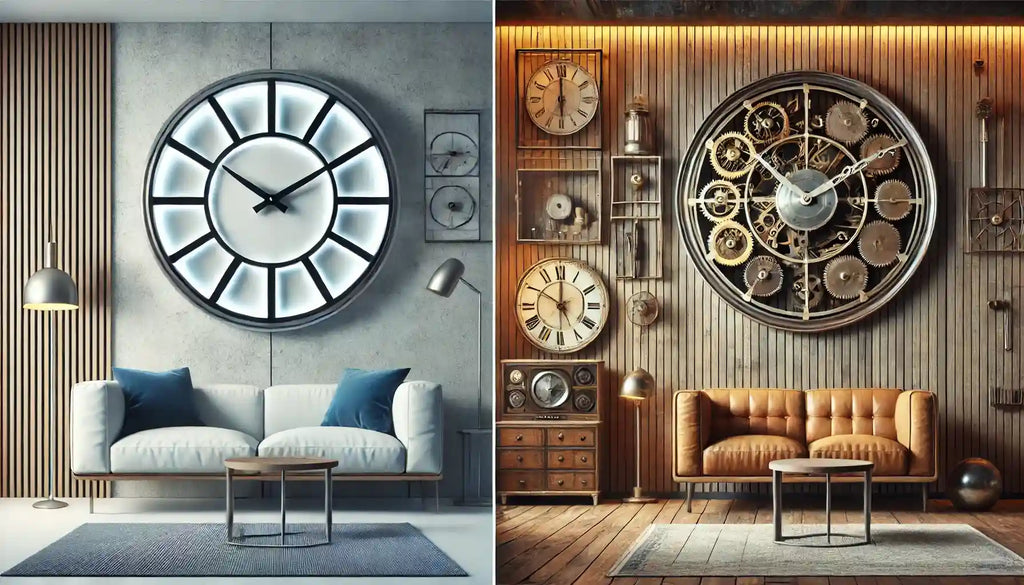
- Detail 1: Mechanical clocks are often more ornate, sometimes with visible movements.
- Detail 2: Quartz clocks offer a variety of designs, ranging from modern to minimalist.
- Detail 3: Choosing according to your interior decoration can improve the visual harmony of your space.
This subsection governs the main design elements that can influence your choice between a quartz and a mechanical clock.
2.3 Cost and accessibility
Analyzing the cost and accessibility of wall clocks is essential during the purchasing process. Let's explore the differences between quartz and mechanical clocks in these aspects.
- Detail 1: Quartz clocks are generally more economical than mechanical ones.
- Detail 2: Mechanical clocks may include luxurious materials and handcrafted finishes.
- Detail 3: Consider your budget and the availability of each type when making your choice.
This subsection helps you evaluate the costs and availability of different clocks in order to optimize your investment.
3. Advantages and disadvantages
Evaluating the respective advantages and disadvantages of quartz and mechanical wall clocks is crucial for making an informed choice. This section will highlight the strengths and weaknesses of each type, allowing you to choose the one that best suits your needs.
- Strengths and weaknesses of quartz clocks: High accuracy, but requires battery replacement.
- Advantages and disadvantages of mechanical clocks: Traditional design, but requires regular maintenance.
- Personal choice: Based on use, preferred design, and the maintenance effort you are willing to invest.
In summary, this section provides an overview of the advantages and disadvantages to facilitate an informed decision when purchasing.
3.1 Strengths and weaknesses of quartz clocks
Discover the strengths and weaknesses of quartz clocks to better understand how they work and what they can offer.
- Detail 1: High precision with minimal time deviation.
- Detail 2: Low maintenance cost, generally limited to regular battery replacement.
- Detail 3: Less traditional charm compared to mechanical clocks.
This subsection highlights the features that make quartz clocks a popular choice among consumers seeking accuracy and easy maintenance.
3.2 Advantages and disadvantages of mechanical clocks
Mechanical clocks, while classic, have various advantages and limitations. Explore them to better understand their place in your environment.
- Detail 1: Possesses a handcrafted charm, with mechanisms often exposed.
- Detail 2: Requires regular maintenance, often more complex and expensive.
- Detail 3: Less precision compared to quartz models.
This subsection highlights the main strengths and challenges of mechanical clocks, allowing us to appreciate their intrinsic qualities and limitations.
4. Selection Guide
This buying guide offers practical advice for choosing the ideal wall clock based on your preferences and specific needs. By considering the criteria and recommendations, you'll be better equipped to make an informed decision.
- Criteria for choosing a wall clock: Includes accuracy, design, maintenance and cost.
- Recommendations for different uses: Depending on whether the clock is intended for a living room, an office or a collection.
- Individual considerations: Take into account personal aesthetics and the desired investment of time and money.
In summary, this section guides you step by step through the process of selecting a clock that perfectly matches your lifestyle and expectations.
4.1 Criteria for choosing a wall clock
The criteria for choosing a wall clock are numerous and include various aspects, from the mechanism to the overall aesthetics. Let's analyze the key elements to make an informed choice.
- Detail 1: Precision, essential for those who always want to be on the exact time.
- Detail 2: Design, which must be compatible with the interior of your living or working space.
- Detail 3: Maintenance and cost, allowing for an assessment of ease of use and the required financial investment.
This subsection provides you with the fundamental criteria for choosing a wall clock that meets your personal and environmental needs.
4.2 Recommendations for different uses
Depending on how you plan to use your wall clock, some recommendations can help you choose the model that best suits your needs.
- Detail 1: For a dining room, a mechanical clock with an elaborate design can serve as a centerpiece.
- Detail 2: In an office, a quartz clock would be ideal for its precision and professional appearance.
- Detail 3: For collectors, choosing a rare or vintage mechanical clock can add value to a collection.
This subsection provides helpful recommendations based on the intended use of your clock, thus maximizing your purchase satisfaction.
Conclusion
By comparing quartz and mechanical wall clocks , we highlighted their distinct characteristics, ranging from precision to aesthetics. Whether you opt for the modern look of quartz clocks or the timeless charm of mechanical ones, each choice will bring a unique touch to your interior.
Investing in a well-designed wall clock is more than just a decorative indulgence—it's also a way to enhance the functionality and harmony of your living space. Why not explore further and discover the clock that will transform your space?
Additional resources
-
Posted in
horloge-murale