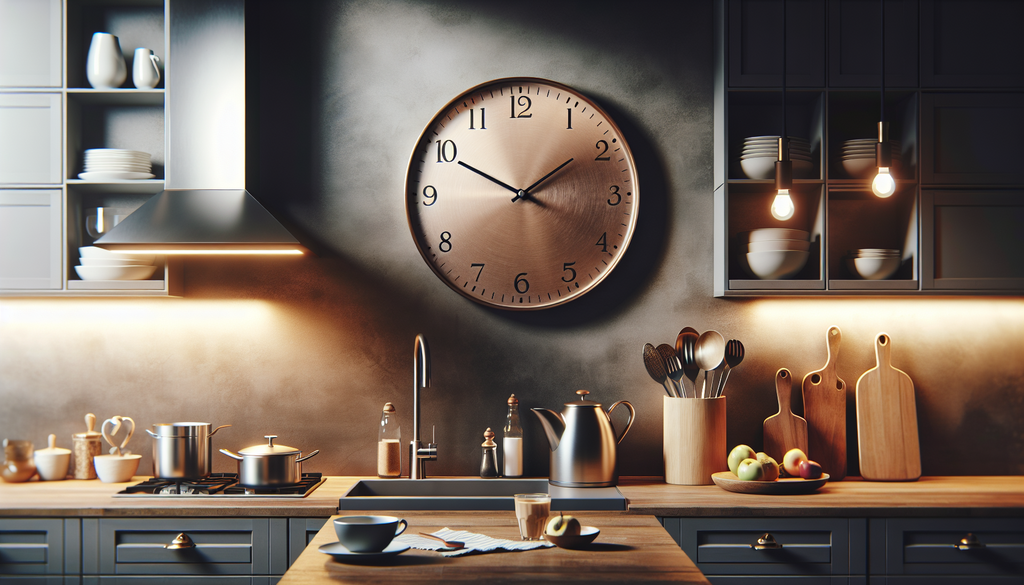
What are some ideas for installing a wall clock in the kitchen?
Summary
- 1. Types of wall clocks
- 2. Where should you position your wall clock?
- 3. Aesthetic and practical considerations
- 4. Creative and DIY Ideas
- 5. Installation Tips
- 6. Care and maintenance
```html
Summary
- 1. Types of wall clocks
- 2. Where should you position your wall clock?
- 3. Aesthetic and practical considerations
- 4. Creative and DIY Ideas
- 5. Installation Tips
- 6. Care and maintenance
1. Types of wall clocks
When it comes to finding the perfect wall clock for your kitchen, the sheer variety of choices can seem daunting. This article explores the different types of wall clocks available to suit your interior design style and practical needs.
- Analog vs digital clocks: Analog clocks offer a timeless charm while digital ones bring a modern touch.
- Styles and materials: Choose from styles ranging from vintage to contemporary and opt for materials such as wood, metal or glass for a personal touch.
- Additional features: Some clocks offer features such as built-in timers or thermometers for added utility.
In summary, knowing the different types of wall clocks will allow you to make an informed choice based on your decorative and practical preferences.
1.1 Analog vs. Digital Clocks
The first decision when buying a wall clock is choosing between an analog or digital model. Understanding the advantages of each type will help you better tailor this choice to your lifestyle.
- Design: Analog clocks add a classic touch to your kitchen while digital ones suit a modern interior.
- Lightness: The simplicity of digital clocks can make them easier to integrate, especially in contemporary spaces.
- Readability: The large digital displays on digital clocks ensure easy readability, ideal for people with poor vision.
This subsection highlights the essential elements to understand the difference between analog and digital clocks and to choose the one that best suits your kitchen.
1.2 Styles and materials
The choice of styles and materials plays a crucial role in the aesthetic appeal of a wall clock in your kitchen. Exploring the available options ensures perfect harmony with your interior décor.
- Variety of styles: From rustic to modern, the style of your clock can enhance the overall theme of your kitchen.
- Mix of materials: Wood creates a warm atmosphere, metal is synonymous with modernity, and glass offers a touch of elegance.
- Durability: The materials chosen must withstand the humidity and splashes typical of the kitchen to guarantee maximum longevity.
By exploring these styles and materials, you can find the perfect wall clock that not only suits your personal taste but also enhances the aesthetics of your kitchen.
2. Where should you position your wall clock?
A well-positioned wall clock becomes a charming and functional asset in your kitchen. Identifying the best locations ensures that the clock is visible and convenient for everyday use.
- Proximity to work areas: Placing the clock near work surfaces makes it easier to keep track of time when preparing meals.
- Optimal visibility: Ensure the clock is visible from multiple angles in the kitchen for effective use.
- Avoid direct exposure: Avoid locations where the clock would be directly exposed to excessive heat or humidity to preserve its durability.
By focusing on these positioning criteria, you can place your wall clock in a way that maximizes its aesthetic and practical aspects.
2.1 Proximity of workspaces
Placing a wall clock near your work areas in the kitchen can transform your cooking experience, making time control more intuitive and seamless.
- Ease of access: A clock close to the work surfaces allows you to keep an eye on the time without interrupting your cooking tasks.
- Careful preparation: Avoid delays in cooking thanks to a built-in timer that alerts you in real time.
- Simplicity: Maintain efficient organization with a wall clock visible at any difficult time.
By positioning the clock judiciously, it is possible to greatly simplify each step of meal preparation.
2.2 Visibility in the kitchen
A clearly visible wall clock can positively influence not only the efficiency but also the overall aesthetics of your kitchen. This approach helps ensure an optimal layout.
- Eye level: The clock should be at eye level to allow for easy and instant reading of the time.
- Balanced appearance: Ensure the clock is equidistant from other decorative elements for a harmonious visual effect.
- No obstruction: Avoid placing the clock behind frequently moved items to ensure it is always visible.
The good visibility of your wall clock in the kitchen makes it practical to use, in addition to contributing to the beauty of your space.
3. Aesthetic and practical considerations
Installing a wall clock in a kitchen isn't just about its appearance. It must also meet practical and aesthetic criteria to blend in harmoniously while being useful.
- Harmonization and size: The clock must integrate with the other elements of your kitchen while being in the right scale.
- Installation and maintenance: Opt for easy-to-install formats and plan for regular maintenance to guarantee its longevity.
- Colour alignment: Opt for tones that complement or contrast with your kitchen's colour palette for a decorative effect.
By considering these practical and aesthetic aspects, you can use your wall clock to enhance the character and functionality of your kitchen.
3.1 Harmonization and size
The size of the clock and its visual integration with other elements in your kitchen are essential for a harmonious decor. Find the balance between functionality and aesthetics with these tips.
- Ideal size: A large clock can serve as a focal point, while a smaller one will fit discreetly into a small space.
- Style consistency: Ensure the clock complements existing furniture and decorations for a cohesive look.
- Appropriate proportion: Ensure that the clock does not visually dominate the space nor disappear among the other decorations.
Making the right choice in terms of size and harmony ensures that your wall clock fits in a way that complements your space and personal style.
3.2 Installation and maintenance
Ensuring proper installation and regular maintenance of your wall clock is crucial for its longevity and smooth operation. Here are a few tips to optimize these aspects.
- Installation guide: Always follow the manufacturer's instructions to avoid any errors that could damage the clock or the wall.
- Ongoing maintenance: Establish a cleaning and battery check schedule to keep the clock in good working order.
- Durability: Choose robust materials that are resistant to the conditions in your kitchen, such as heat and humidity.
These installation and maintenance recommendations will help preserve the efficiency and appearance of your wall clock over time.
4. Creative and DIY Ideas
For those looking to add a personal touch to their kitchen, creative ideas and DIY projects for wall clocks are a captivating option. Explore your artistic talents and create a unique clock.
- Custom projects: Design your own clock according to your personal preferences for a custom design that reflects you.
- Use of recycled objects: Adopt a sustainable approach by integrating recycled materials into your creation for an ecological impact.
- Personalization: Add elements like photos or designs that have personal meaning for a truly unique clock.
By making your own DIY wall clock , you can not only contribute to the decoration, but also infuse your personality into your kitchen.
4.1 Custom Projects
Custom designs for a wall clock allow you to unleash your creativity while perfectly adapting to your specific decorating needs. Let's explore some options.
- Unique design: Unleash your imagination to create a design that can't be found anywhere else.
- Perfect coordination: Incorporate the colors and styles present in your kitchen for overall consistency.
- Customization: You have complete control over the size and features of the clock to suit your desires and needs.
Using custom designs allows you to have a wall clock perfectly suited to your world and personal style, while guaranteeing a unique piece.
4.2 Use of recycled objects
Creating a wall clock from recycled objects is not only an environmentally friendly approach, it can also be a creative way to beautify your kitchen with an original and meaningful design.
- Material source: Use items such as old vinyl records, wooden pallets, or used kitchen utensils as the base of the clock.
- Innovative design: The use of recycled objects allows for the creation of charming and unusual designs that stand out from the rest.
- Reducing your ecological footprint: By using recycled materials, you help reduce waste and adopt an eco-responsible approach.
Using recycled items allows you to transform materials that would otherwise have been thrown away into an artistic wall clock that adds personality and charm to your kitchen.
5. Installation Tips
Properly installing a wall clock ensures its stability and longevity while maximizing its visual impact. These tips will guide you through the process to ensure your clock is installed optimally and securely.
- Ideal height: Make sure the clock is at a height where it is easy to read without tilting your head.
- Secure fixing: Use wall plugs and screws suitable for your wall material to ensure a solid fixing.
- Precautions: Follow the manufacturer's recommendations to avoid any damage due to improper installation.
These installation tips will help you position your wall clock securely so that it can beautify your kitchen for many years to come.
5.1 Ideal Height
Mounting a wall clock at the correct height is crucial for its usefulness and visual impact. Follow these recommendations to ensure it fits perfectly in your kitchen space.
- Place at eye level: Position the clock at a height where it is easily readable, usually about 150-170 cm from the floor.
- Avoid obstructions: Ensure that nothing blocks the view to the clock to maintain its functionality.
- Focal point: A judicious height will make the clock a pleasant visual landmark when entering the kitchen.
Respecting the ideal height ensures that your wall clock is always as useful and aesthetically pleasing as possible.
5.2 Secure fastening
Securely mounting your wall clock is essential not only for its longevity but also for ensuring home safety. Here's how to do it reliably.
- Support assessment: Inspect the wall material (plaster, concrete, brick) to choose the appropriate fixing.
- Mounting hardware: Use wall plugs and screws suitable for the load of the clock to prevent falls.
- Precise alignment: Use a level to ensure the clock is installed perfectly straight.
Following these recommendations for securely fixing a wall clock in your kitchen will optimize safety and stability for a reliable decorative element.
6. Care and maintenance
Regular maintenance of your wall clock ensures its proper functioning and longevity. The following tips will guide you in keeping your clock in optimal condition over time.
- Regular cleaning: Wipe the clock with a soft, damp cloth to remove dust and dirt.
- Battery replacement: Check the clock batteries regularly and replace them as needed to avoid any interruption of timekeeping.
- Inspection: Consult a professional if you notice any anomalies in the clock's movement to prevent more serious problems.
By following these tips, you will ensure the longevity and continued proper functioning of your wall clock in your kitchen.
6.1 Regular Cleaning
Regularly cleaning a wall clock is essential, not only for its longevity but also to preserve its aesthetic appeal. Here are a few simple practices to follow.
- Soft cloth: Use a soft cloth to remove dust without scratching the clock's surface.
- Gentle solution: Avoid abrasive or corrosive cleaners; if necessary, a mild mixture of water and soap is sufficient.
- Frequency: Clean the clock every two weeks to maintain its cleanliness and shine.
This cleaning routine allows your wall clock to stay looking like new and to continue to beautify your kitchen.
6.2 Changing the batteries
Changing the batteries in your wall clock is a simple but crucial step to keep it working. Here's how to manage battery replacement efficiently.
- Check: Regularly inspect whether your clock keeps good time to detect low batteries.
- Battery type: Use the battery type recommended by the manufacturer to ensure optimal operation.
- Backup storage: Always keep a set of spare batteries to prevent any unexpected shutdown of your clock.
By paying attention to the energy requirements of your wall clock , you ensure that it always works properly in your kitchen.
Frequently Asked Questions
- What size wall clock is ideal for a kitchen? An intermediate size, generally 30-40 cm in diameter, is suitable for being seen without being bulky.
- Where is it advisable to install the clock for maximum readability? Install it at eye level, preferably in direct view from the entrance and close to food preparation areas.
- How can I ensure my clock is securely mounted to the wall? Make sure you use appropriate wall plugs and screws and install it on a solid surface.
This FAQ offers quick help for any questions about buying and installing a wall clock in your kitchen.
```Conclusion
By reading through this article, we discovered how a wall clock can transform your kitchen into a space that is both functional and aesthetically pleasing.
Whether you opt for an analog or digital clock , or for a contemporary or rustic design, the important thing is to choose the one that will perfectly complement your space.
🕰️ Ready to choose your next wall clock? Explore our selections and let our expert advice guide you to the perfect choice!
Additional resources
-
Posted in
horloge-murale-cuisine